
collaborative producing toolkit:
chapter 2: Why Co-Produce?
How Common Is Co-Producing?
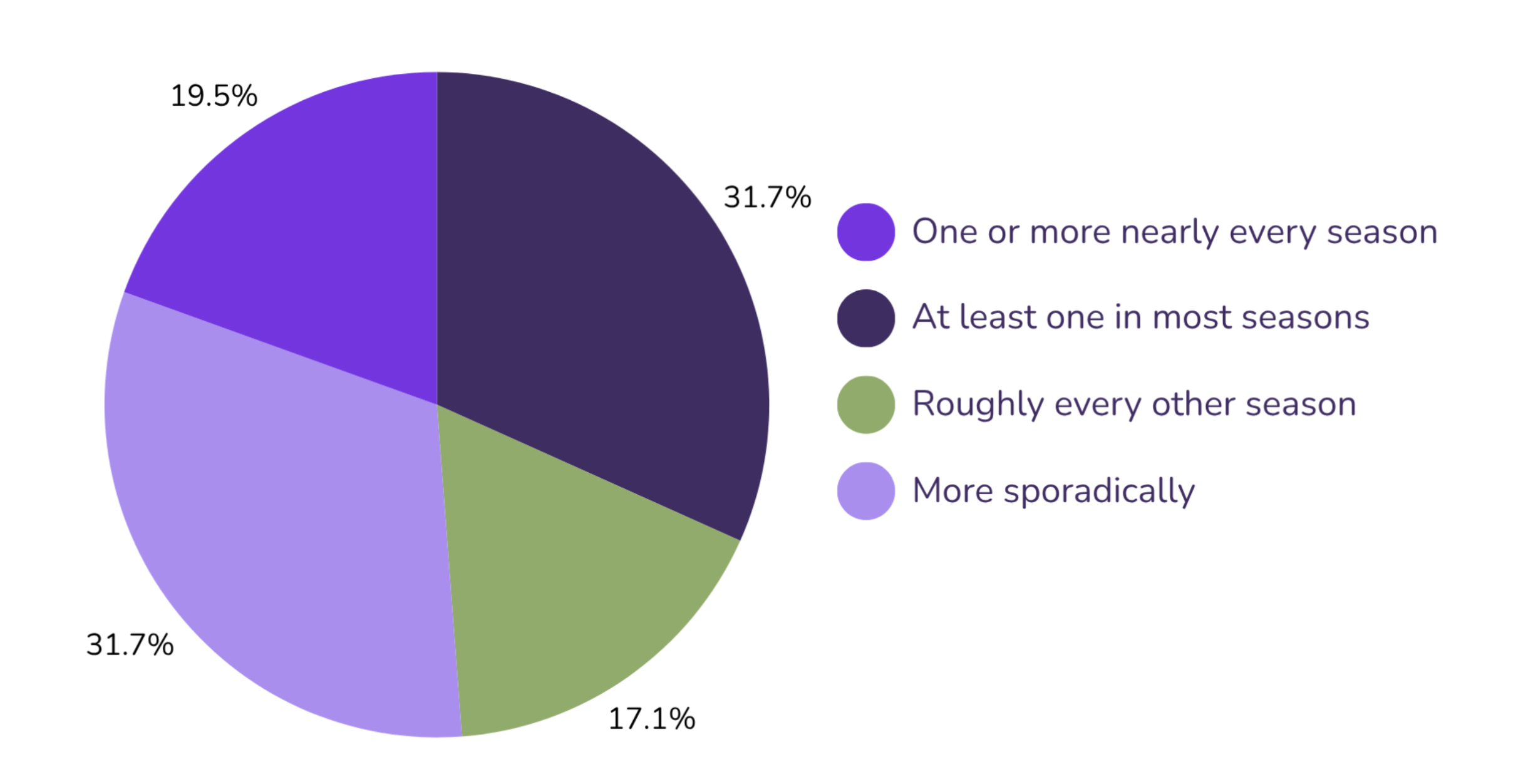
Co-producing is already a regular part of the producing model for many theaters. Roughly half of the theaters responding to our survey reported that they are co-producing more than they did in the past, and nearly half described co-productions as an essential tool in balancing their season budgets. Approximately two-thirds reported co-producing at least every other season, although the frequency varies considerably across organizations, as shown in fig. 1.
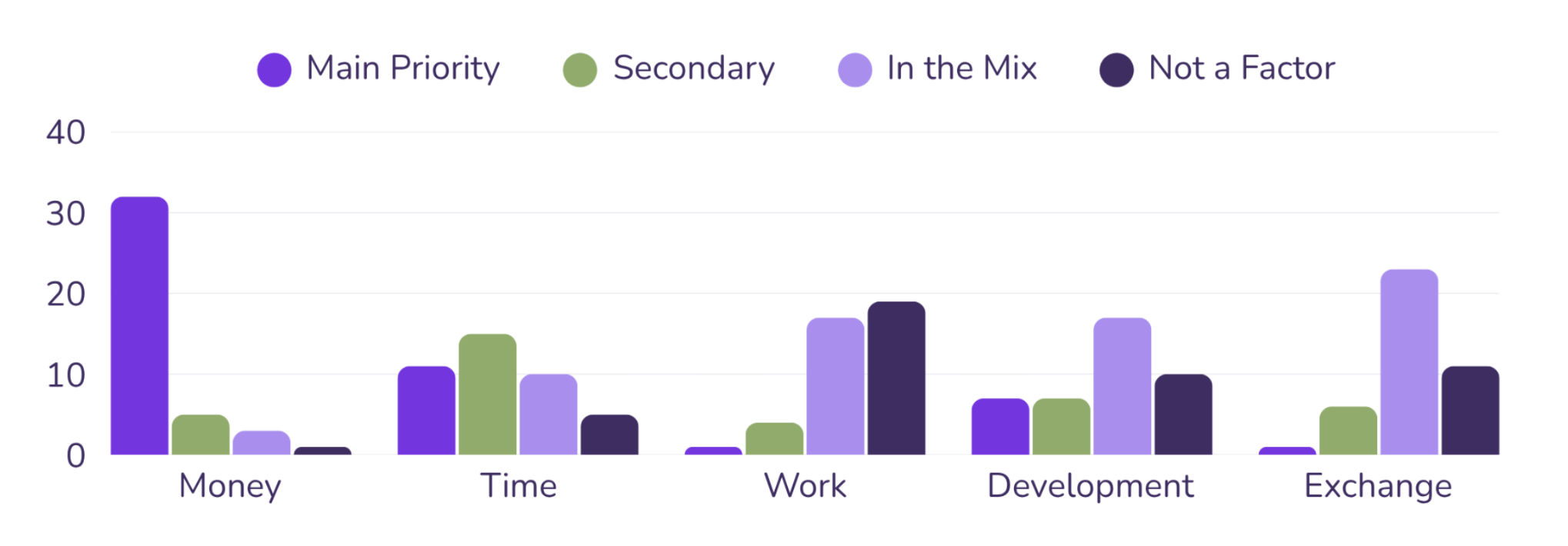
There are many reasons to co-produce or seek out producing partnerships. Potential financial savings are an important motivation, but theaters also identified a range of strategic and artistic benefits. Our survey asked theaters to rank the relative importance of these and other motivations for co-producing based on how their institutions prioritized them most of the time, shown in fig. 2.
The considerations identified through the survey, and through our broader conversations with theaters, are explored below.
Shared / Pooled Costs
Rehearsal - Costs are often cut roughly in half for each party by rehearsing the show only once.
Production - Usually approached as a 50/50 split for most elements (sets, props, costumes), but with some added costs, e.g, set adaptation, trucking that would otherwise not be incurred.
Additional Items - Less consistently, casting and marketing assets such as photography, show art, archival video, and b-roll may yield more modest savings might include casting and marketing assets (photography, show art, archival video, b-roll).
Expanding Capacity
Scale - Larger shows may be more affordable.
Staffing - The Receiving Theater’s team will build one less show in its season.
Expertise - A producing partner’s team may bring capabilities outside of your own team’s expertise, whether stylistically, developmentally, technically, or in other areas.
Extending Reach
Your company’s work will be seen by audiences outside of your home base, exposing the theater and its work to a new city or even a different audience within the same city.
Delivering Something New
A collaboration may provide an opportunity to present a different style of work to your audience than your theater typically produces.
Artist Employment
Co-Productions can provide artists with more work and additional weeks of employment, although there are exceptions; for example, directors and creative team members may receive one fewer full fee than they would for two independently produced productions.
Play Development
Particularly beneficial for playwrights, directors, and the creative team is the opportunity for “second bite of the apple” which ensures that the first run of a new play isn’t its last. Staging two consecutive runs with at least a second tech process in between can give artists more time and opportunities to further develop a new work and potentially more exposure and opportunity to find future partners or productions.